
The birth of a child is a moment full of magic and indescribable joy. For parents, an exciting time of getting to know their baby has begun, but it is also a time when the baby's health is paramount. One of the most important medical measures in the first days of life is the Newborn screening. The fundamental message of medicine today is: newborn screening. New tests aim to help prevent serious harm to the child. Through continuous medical advancements, more and more rare but potentially dangerous diseases can be detected before they show their first symptoms.
In this comprehensive guide, you'll learn everything you need to know as expectant or new parents about this crucial blood test. We'll explain how the test works, which diseases it focuses on, and why modern medicine can achieve so much more today than it could just a few decades ago.
What is newborn screening and why is it so important?
Newborn screening is a preventive mass examination for all babies, performed a few days after birth. Many parents wonder: What is screened for in newborn screening? In short, it looks for rare congenital diseases that are not outwardly visible on the baby.
The ultimate goal of this test is absolute Prevention of late consequences through timely therapy. Many congenital diseases can be treated excellently if detected early. However, if left undiscovered, they can lead to severe physical or mental disabilities or even premature death.

A Look into the Past: The Difference Between the Guthrie Test and Modern Screening
You may have heard of the „Guthrie test“ in connection with screening. American physician Robert Guthrie developed the first mass-producible blood test for newborns in the 1960s to detect the metabolic disorder phenylketonuria (PKU).
The Difference between Guthrie test and modern screening lies in technology and bandwidth. While the classic Guthrie test was based on bacterial growth and could only detect one disease, today laboratories use so-called tandem mass spectrometry. With just a few drops of blood, dozens of different parameters and diseases can be analyzed simultaneously today. Development is rapid – and it saves lives.
The Process: How the Examination Works for Babies
The test is ideally performed between the 36th and 72nd hour of the child's life. This period often falls exactly into the Preparing for the first U2 examination, which is the baby's first major medical check-up. If you leave the hospital earlier (outpatient birth), usually the midwife or pediatrician performs the test.
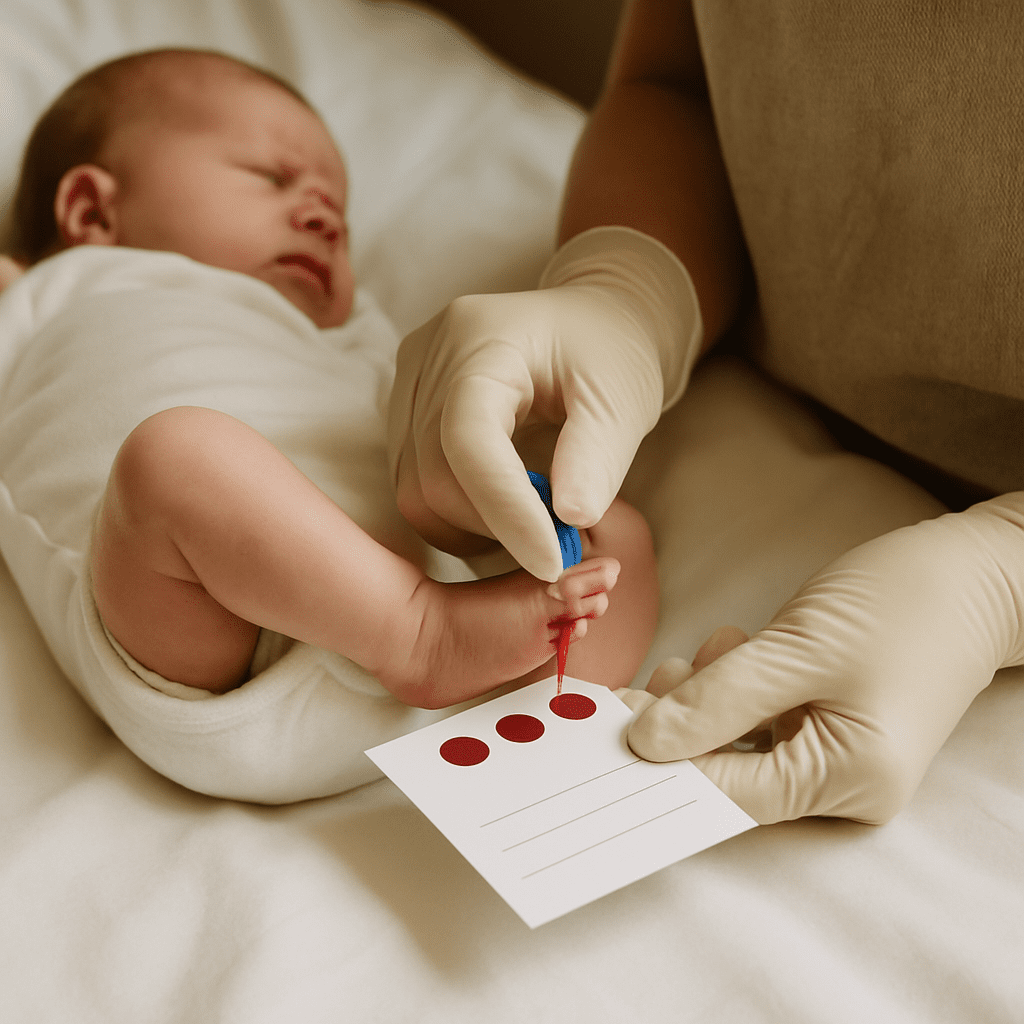
The Heel stick blood draw procedure is standardized and conceivable simple:
- Preparation: The baby's heel is often gently massaged or warmed to promote blood circulation.
- The Pix The heel is gently pricked with a tiny, special lancet (which penetrates barely a few millimeters deep).
- Blood draw The midwife or doctor drips a few drops of blood onto a special filter paper card.
- Drying & Shipping: The blood drops dry on the card, which is then immediately sent to a specialized screening laboratory.
For the baby, the little prick is often barely noticeable, especially if they are being breastfed or cuddled in their parents' arms during it.
The following diseases are screened for in newborns: * Congenital adrenal hyperplasia * Cystic fibrosis * Galactosemia * G6PD deficiency * Homocystinuria * Maple syrup urine disease * Medium-chain acyl-CoA dehydrogenase deficiency (MCADD) * Phenylketonuria (PKU) * Severe combined immunodeficiency (SCID) * Sickle cell disease * Spinal muscular atrophy (SMA) * Congenital hypothyroidism * Biotinidase deficiency
The list of diseases examined in Germany is determined by the Joint Federal Committee (G-BA) and is regularly updated with new medical findings. The question „Which diseases are tested for in newborn screening?“ can be divided into several main categories:
Early detection of congenital metabolic diseases
This is the historical core of screening. It concerns defects where the body cannot properly process certain nutrients. These include diseases such as phenylketonuria (PKU), galactosemia, or MCAD deficiency. For example, in the case of PKU, if a special diet is strictly followed immediately after birth, the child develops completely normally. Without this diet, severe intellectual disabilities would occur. Hormonal disorders such as congenital hypothyroidism also fall into this category and can be easily treated with thyroid hormone drops.
2. Cystic Fibrosis Early Detection in the First Month of Life
Since 2016, testing for cystic fibrosis has been part of routine screening. This is a congenital disease in which thick mucus obstructs the lungs and digestive organs. The Cystic Fibrosis Early Detection in the First Month of Life is revolutionary, as early inhalation therapies, special nutrition, and new medications drastically slow the progression of the disease and massively increase the quality of life and life expectancy of affected children.
3. Early Diagnosis of Spinal Muscular Atrophy (SMA)
Since 2021, blood has also been tested for SMA. SMA is a rare genetic defect that leads to the progressive breakdown of nerve cells in the spinal cord and thus to severe muscle wasting. Early diagnosis of spinal muscular atrophy is like a medical miracle today: Novel gene therapies administered before the onset of the first symptoms can almost completely stop the outbreak of the disease. Untreated, the most severe form of SMA previously led to death, mostly within the first years of life.
4. Detection of Immunodeficiencies in Infants
Also relatively new to the program is screening for severe combined immunodeficiency (SCID). Babies with SCID are born without a functioning immune system. For them, even a harmless cold can be life-threatening. Detection of Immunodeficiencies in Infants The screening allows children to be immediately isolated and cared for in a germ-reduced environment until a life-saving stem cell donation (bone marrow transplant) can be performed.
New Developments and Modern Genetic Tests
Medicine doesn't stand still. Specialized research centers are already testing how genomic sequencing can improve screening. Benefits of New Genetic Tests for Newborns are obvious: They are more precise, produce fewer false results, and can theoretically detect hundreds of genetic anomalies.
Here, the Role of Pediatric Metabolic Medicine an increasingly important role. As soon as a test is positive, highly specialized pediatricians and metabolic experts take over care. They ensure that the latest scientific findings and therapies are directly applied to the patient.

Are there downsides to newborn screening?
Despite all the obvious advantages, parents also have to ask themselves if it is at Newborn Screening Disadvantages happens. In fact, there are some points that are being discussed:
- False-positive results: The most common disadvantage is psychological in nature. Sometimes the test raises an alarm even though the child is perfectly healthy (false positive result). This can lead to extreme anxiety and stress for new parents until a second control test provides reassurance.
- Knowledge of late-onset diseases: There is an ethical debate about whether children should be screened for incurable diseases that only manifest in adulthood. Currently, however, screening in Germany is strictly limited to diseases that already in childhood must be treatable.
- False-negative results It is very rare for a child to suffer from one of the diseases despite an inconspicuous screening. The test does not offer a 100 percent guarantee.
Is newborn screening mandatory for parents?
Given the sensitivity of this data, the legal question arises: Is newborn screening mandatory for parents? The clear answer is: No. In Germany, Austria, and Switzerland, screening is voluntary. Parents must give their explicit written consent before the blood sample is taken. Nevertheless, it is strongly recommended by all pediatric professional societies, as the benefits far outweigh the risk of a small prick.
Security, Results, and Financial Aspects
As parents, you entrust your most valuable asset to the medical system. Therefore, it is important to know the framework.
Safety and reliability of screening results
The laboratories work under the strictest quality controls. Safety and reliability of screening results is extremely high. Through the combination of biochemical tests (such as mass spectrometry) and modern molecular genetic analyses (e.g., for cystic fibrosis or SMA), error rates are continually minimized.
Correct behavior in case of conspicuous screening findings
What happens if the doctor calls and reports that the test was abnormal? The most important thing first: panic is a bad advisor. Correct behavior for an abnormal screening finding looks like
- Stay calm A striking finding is still none final diagnosis. It simply means a follow-up test is necessary.
- Act fast: Immediately follow the instructions of your pediatrician or the screening center. Often, a new blood sample (e.g., for thyroid levels) or a sweat test (if cystic fibrosis is suspected) needs to be taken.
- No excessive Googling: Don't search for symptoms on your own online. Rely on the experts in pediatric metabolic medicine.
Coverage of Extended Preventive Health Screenings
Parents do not need to worry about the costs of standard tests. The costs for the regular newborn screening recommended by the G-BA (Federal Joint Committee) are fully covered by statutory and private health insurance companies in Germany. When it comes to the Coverage of Extended Preventive Health Screenings If you're considering specialized genetic panels (offered by some private laboratories, for example), you should check with your health insurance provider in advance. However, the standard panel is usually sufficient to cover acutely dangerous and treatable diseases.
Conclusion: A small prick for a healthy life
The development of newborn screening is one of the greatest success stories of modern preventive medicine. The guiding principle remains clear: newborn screening. New tests aim to prevent severe damage to the child. Today, a simple drop of blood can save lives and prevent severe disabilities.
Whether it's about early detection of congenital metabolic disorders, the groundbreaking early diagnosis of spinal muscular atrophy, or the detection of immunodeficiencies in infants – screening offers your child an invaluable safety net. Even though any false-positive results may cause temporary concern, the benefits clearly outweigh them.
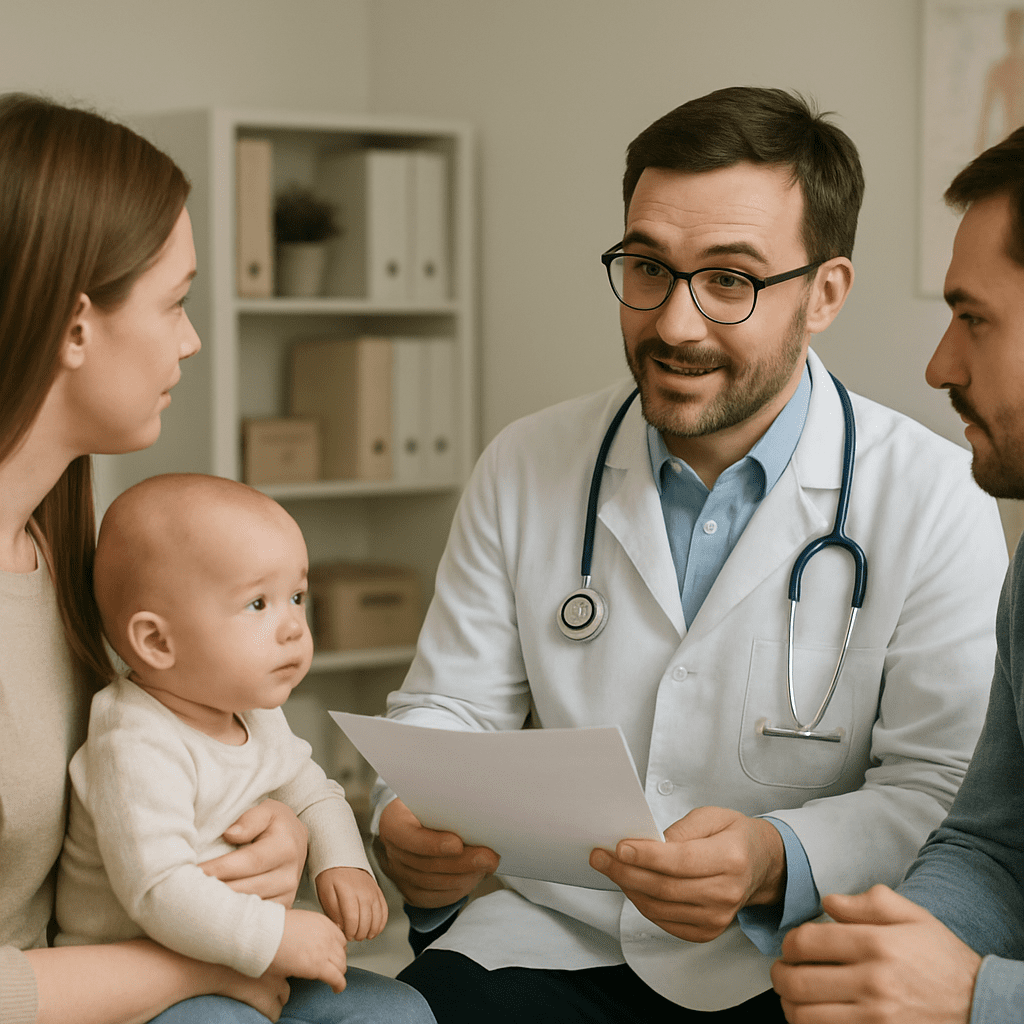
Use the informational discussions as part of the preparation for the first U2 examination, ask all your questions, and give your consent for this important test. It is the best start you can give your baby for a long, healthy, and happy life.