
How a Farewell House Helps Bereaved Parents Process Loss
When the unimaginable happens and one's own child dies, the world seems to stand still from one second to the next. But while the hearts of the bereaved are still frozen in the deepest shock, sterile, bureaucratic hospital mechanisms often kick in immediately, robbing families of exactly what they need most right now: time. The mere thought of having to immediately hand over the loved one to strangers in this exceptional situation massively intensifies the initial trauma.
Where does one spend their last hours together when the clinic feels too cold and one's own home feels too oppressive? In this gap, it becomes clear how an "Abschiedshaus" (farewell house) helps bereaved parents process their loss. It functions as a third way—a warm sanctuary designed like a quiet living room. This specialized grief support for parents often grants them their own key to a refuge where time noticeably slows down.
In practice, experienced grief counselors repeatedly emphasize how crucial such a deceleration is to meet the special needs of grieving parents after the death of a child. In order to truly „grasp“ the misfortune, hands must be allowed to gently stroke the face one last time before the long process of integrating the farewell into life begins.
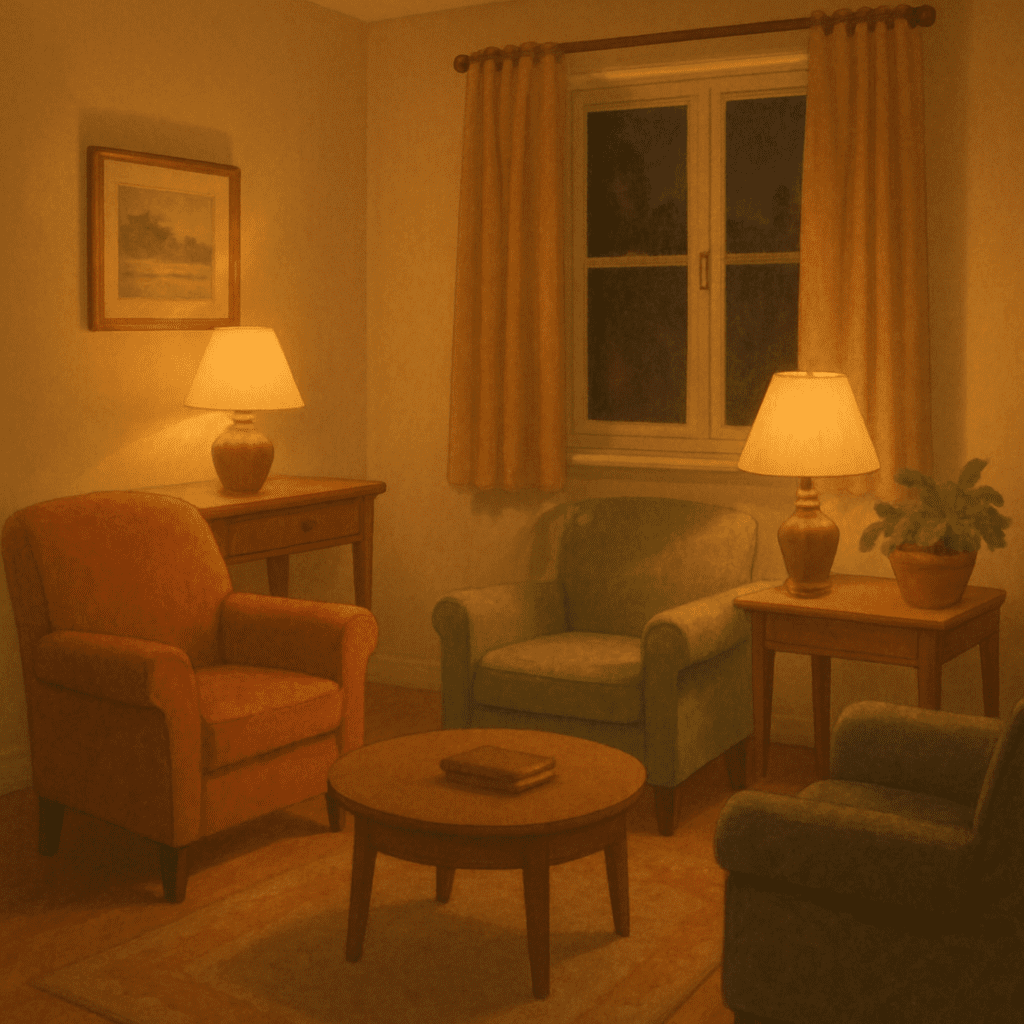
Why a farewell house is not a mortuary: The difference between sterility and comfort
After a sudden loss, families are often left with only a hasty farewell in a sterile hospital room. A farewell house offers a completely different path: it is not a clinical place, but a sanctuary. This home-based farewell is about regaining control. Parents are no longer silent visitors in a medical facility here; instead, as hosts, they find a genuine temporary home in their own grief.
The essential difference between a farewell house and a cemetery chapel is clearly evident in four areas:
- Atmosphere: The emotional added value of a home atmosphere with sofas and soft colors displaces the usual clinical coldness.
- Access Families are usually given their own key so that they can be with their deceased child around the clock.
- Time frame The advantages of a private viewing room mean above all timelessness – there is no time pressure from subsequent funeral services.
- Design Familiar stuffed animals, personal blankets, or favorite music make the room unique and personal.
Such details transform an unbearable situation into a protected environment in which only one's own pace matters. Instead of being pushed through bureaucratic procedures, families are allowed to simply sit, cry, or read a final bedtime story here. This deeply felt sense of security creates the safe foundation for the next, elementary step: the healing power of the tangible and how touching and holding the child supports the mind.
The Healing Power of the Tangible: How Touching and Holding a Child Supports the Mind
Merely looking is often not enough to intellectually process the unfathomable. After the world suddenly came to a standstill, a deep inner chasm forms between the knowledge of loss and emotional comprehension. It is precisely here that the psychological significance of conscious farewell unfolds its healing effect. It is a process that literally works through one's own hands.
The German word „Begreifen“ already carries its most important meaning within it: one must touch something to be able to grasp it mentally. Experienced grief counselors gently encourage parents to overcome their shyness around the lifeless body. Stroking the cheeks, holding the little hand, or combing the hair are not morbid actions, but elementary emotional anchors. This gentle physical contact unmistakably signals to the brain that the child has indeed passed away and sustainably protects against traumatic displacement mechanisms.
For many affected families, this phase becomes an indispensable time for final acquaintance and letting go. Especially when a baby dies shortly before, during, or right after birth, shared life memories are missing. Sensitive support during the vigil for children creates a safe framework during these difficult hours. It allows parents to view their child extensively, hold them, and physically give them all their love.
From this first, hesitant touch, a new confidence in one's own strength slowly grows. Physical closeness dissolves the initial shock and opens up space for active acts of care. As the fear of death subsides, the courage arises to write the final chapter oneself – and to discover how individual rituals transform powerlessness into action.

Writing Your Own Last Chapter: How Individual Rituals Transform Powerlessness into Action
As the initial shock slowly subsides, many bereaved parents are overcome by a paralyzing sense of helplessness. They wanted to protect, care for, and accompany their child throughout their life – and now they find themselves seemingly empty-handed. Yet, it is precisely here that active engagement unfolds its therapeutic power: by consciously creating farewell rituals for their star babies, families transform their initial helplessness back into tangible parental care.
A self-determined farewell in a protected setting allows loved ones to shape this most difficult of paths according to their own inner needs. This often creates tangible, comforting memories that form an important foundation for the later grieving process. Such personal actions can look very different:
- Taking delicate finger or footprints in plaster or on paper.
- The gentle cutting of a small lock of hair.
- Playing familiar favorite music or reading one last bedtime story.
- The communal painting of the coffin, which especially helps siblings naturally process the incomprehensible.
For such intimate moments, the right environment is essential. Modern rooms for a personalized farewell service in a funeral home therefore resemble a warm living room more than a sterile institution. Here, people can cry, craft, or simply keep watch in silence without hesitation. However, for these rituals to truly unfold freely, another crucial ingredient is needed: an environment where time ticks not according to external schedules, but solely to the rhythm of the family.
Time Without the Stopwatch: Why 24/7 Availability Takes the Pressure Off
While the clocks of everyday life tick on deafeningly, orphaned families need a place of deceleration. Often, in the initial shock, the anxious question arises: How long can a child stay in the house of farewell? The law usually grants relatives several days before a final burial must take place. This deadline is not understood as a bureaucratic limitation in these rooms, but as a precious gift of time – a protective window of opportunity to gradually come to terms with the painful reality at one's own pace.
A physical key to the front door becomes the strongest symbol of regained parental control. It signifies that mothers and fathers can come in the middle of the night when the longing becomes unbearable, without having to ask anyone for permission. Precisely this unrestricted, safe atmosphere in the farewell house for the healing process is essential. It removes the immense emotional pressure from the soul that rigid visiting hours would inevitably create.
Sitting by the bedside at night, keeping a watchful, protective vigil, stems from a deeply natural protective instinct. Although families have this intimate space entirely to themselves, empathetic support during a child's wake is always available should grief become overwhelming. To be able to use this precious time without worry, however, also requires clarity about the support available in the background: transparently arranging costs and professional guidance without overbearing them gives parents the necessary security.
Background Support: Costs and Professional Guidance Without Patronizing
In this extreme emergency situation, every organizational decision seems to be an insurmountable hurdle. Here, collaboration with specialized child funeral directors is invaluable. These experts don't snatch the planning out of the parents' hands; instead, they act as quiet, protective companions. They gently encourage families to take charge of designing this last journey together, at their own pace and with self-determination, without being patronized.
Often, alongside the emotional burden, there is a quiet concern: What does using a farewell house cost? Clear transparency is crucial in this exceptional situation to keep the mind free for what is essential. The aspects involved are usually composed as follows:
- Premises and Care: Daily rates for private safe room and careful care.
- Operating costs Expenses for a warm, homely atmosphere beyond clinical coldness.
- Financial aid Targeted relief through donations, support associations, or foundations, so that money never becomes an obstacle to saying goodbye.
No one has to carry this heaviness alone. Professional grief counseling is available on call during the wake – whether for a supportive conversation or for dressing the child together. This invisible safety net catches you when your own strength wanes. It creates precisely the trusting foundation that opens the transition from shock to integration and shows how conscious farewell enables you to move forward in life.
From shock to integration: How conscious farewells enable moving on
The idea of how to continue breathing after the worst of all fates often eludes our understanding. However, the first steps on this difficult path do not have to take place in clinical coldness. A safe haven offers those precious hours that form the foundation for the rest of life. Time, a secure space, and protective rituals help to literally grasp the incomprehensible within a safe framework.
A farewell house changes our societal perspective on how we deal with such a loss. It is never about dissolving the pain. Effective grief support for parents means, rather, gently cushioning the deep shock so that the death can later be integrated healthily into one's own biography. When families are allowed to say goodbye at their very own pace, this approach protects mental health in the long term.
For those affected, there are comforting alternatives to the rushed standard procedure that allow for reflection and valuable support. Grief will remain, but it can transform – in a place that gives space to pain and a gentle light to enduring love.