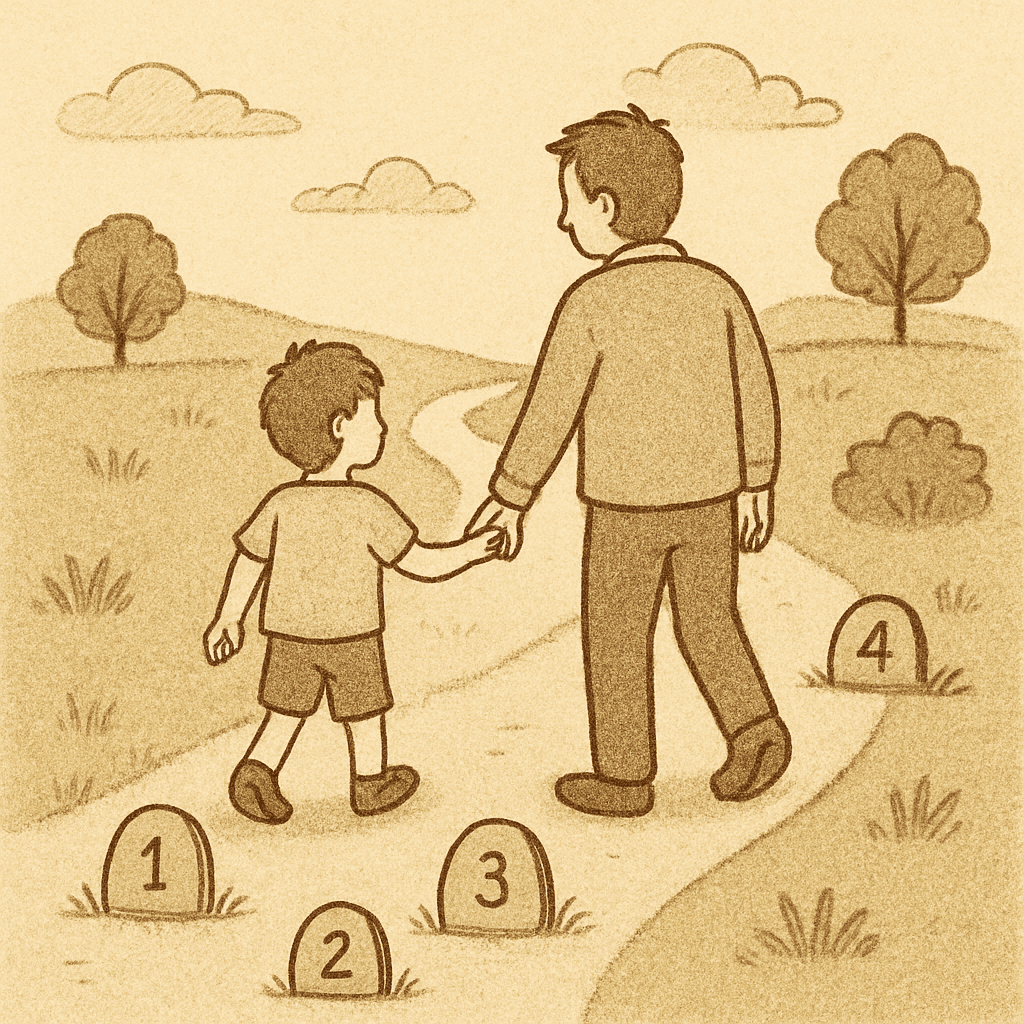
You are at the playground: Your child suddenly freezes on the climbing frame and looks to you for help. Our instinctive urge to intervene and immediately „rescue“ is enormous in these moments. But what if this brief stumble is crucial for building lasting self-confidence? As soon as we consciously curb our maternal or paternal protective instinct, we transform from rescuer to valuable companion.
Developmental psychology research clearly shows that self-confidence is not an innate talent but a learnable skill. Imagine it like a muscle that grows not through idleness, but through small challenges and so-called productive failure. In everyday life, the mirroring strategy comes into play here: children unconsciously mirror our own reactions. If you remain calm during their failed attempts instead of panicking, they learn that setbacks are safe and normal. This is exactly how you can foster your children's self-confidence without overprotecting them.
This change in perspective gradually transforms a frustrated „I can't do this“ into a courageous „I can do this." night “not." By providing safe space for their own mistakes, resilience can be playfully fostered in children – their inner strength that helps them get back up. We don't have to avoid every pain; instead, we can trust our children with real growth.
The key difference between self-esteem and self-awareness
We often use both terms interchangeably, but there's a clear difference between self-esteem and self-confidence when it comes to your children's emotional development. True signs of a lack of self-confidence in toddlers often appear subtly – for example, when they constantly and uncertainly ask while drawing, „Is this really beautiful?“ This is precisely where the danger lies that they unconsciously equate their inner worth with their performance.
So that children learn that they don't become valuable only through success, this simple distinction will help you as parents:
- Self-esteem (Being): The firm inner knowledge: „I am loved unconditionally, exactly as I am - even when I fail.“
- Self-awareness (The Doing): The belief in one's own abilities: „I can solve this problem, or at least try to learn how to.“
Show through unconditional affection that achievement alone does not bring happiness. A strong sense of self-worth cushions emotional falls when confidence in one's abilities is still shaky.

The Praise Trap: Why „You're so smart“ Kills Courage and What You Should Say Instead
We all know the impulse: a child builds a huge tower or brings home a good grade, and we enthusiastically exclaim, „You're a real genius!“ Surprisingly, this well-intentioned praise can hinder self-confidence. This is the so-called praise paradox: when we evaluate innate qualities, children often become afraid of making mistakes because they fear losing their positive label.
This is where the core of Growth Mindset vs. Fixed Mindset in Children. If results are praised primarily, ability seems like something unchangeable – children then give up more quickly when faced with real hurdles. However, if we shift the focus from perfect performance to actual effort, they learn that perseverance pays off and abilities grow like a muscle.
So that we Strengthen children with positive reinforcement, This is called process praise. Try these five sentences in everyday life next time:
- „I saw exactly how long you tinkered with that difficult task!“
- „You didn't give up when the tower collapsed earlier – strong!“
- „What idea did you have in mind when you painted this picture so vibrantly?“
- „It's completely okay that it's not working out yet, you're just practicing.“
- „I'm impressed with how thoroughly you prepared for this test.“
Such small linguistic adjustments take the pressure off the assessment.
Self-efficacy in everyday life: How small tasks trigger the „I can do it“ effect
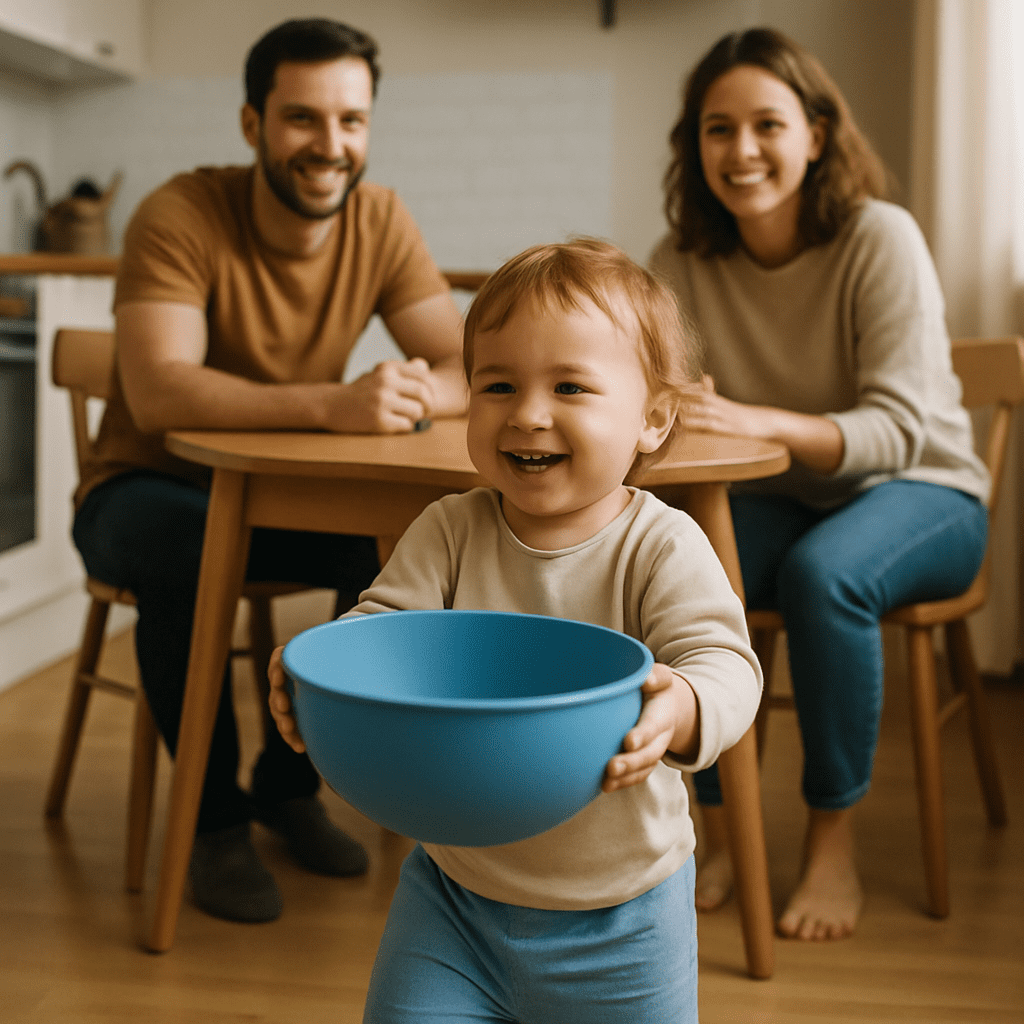
Imagine your child pouring juice all by themselves. Most of the time, it ends with a puddle on the table, but it's precisely in this little bit of chaos that something incredibly valuable is created: self-efficacy. This is the firm knowledge that one's own actions tangibly influence the world – essentially, the inner „I can do this“ feeling. When children help around the house and take on real tasks, they experience autonomy and realize that their contribution truly matters to the family.
A tried-and-true rule for everyday life is: increase self-efficacy through small successes. This often requires a good deal of patience from us, as it's not about efficiency or perfection, but about important breathing room. Let the youngsters sort socks, set the table, or tie their shoes. Even if getting ready in the morning takes five minutes longer, you are giving them direct proof of their own abilities.
The secret to handling these tasks is simple: we should Promote independence without applying pressure. If the sweater is on backwards, it's not a drama, but a normal intermediate step to mastery.
Mistakes as Friends: How to Turn Fear of Failure into Curiosity
An angry cry from the children's room because the Lego tower has collapsed for the third time – a classic frustrating situation. When frustration boils over, we often tend to immediately offer a quick fix or downplay the problem. However, in order to specifically reduce fear of failure in elementary school children, we must establish a completely new culture of error at home: mishaps are not catastrophes, but indispensable signposts on the path to success.
Children observe us closely in everyday life through so-called model learning – which is simply copying behavior. If the sauce burns while you're cooking and you loudly admonish yourself, your offspring unconsciously learn that mistakes are bad. If you instead calmly say: „Oops, I messed that up. Next time I'll turn down the heat!“ they experience firsthand through your example how to learn to deal healthily with mistakes and setbacks.
To put this theory into practice during heated moments of frustration, a simple three-step plan helps:
- Breathe Allow the child's strong emotions first, and take a deep breath together before addressing the problem.
- Analyze Curiously, instead of critically, asks: „What exactly didn't go as well as you wanted here?“
- Customize As a team, consider afterwards: „What could we do differently next time?“
Through this approach, the fear of failure slowly transforms into genuine curiosity about the next attempt.
The Magic of the Word „Still“: Encouragement Strategies for Shy Children
A hesitant glance at the edge of the sandbox when new playmates appear is completely normal. Shyness is initially just a temperament and does not necessarily mean a lack of self-confidence. Nevertheless, we often look for ways to offer gentle support. The most effective tips for more courage in social situations start right here: they accept the child's feelings without labeling them as permanent.
When your child says the typical phrase „I don't dare to do that!“, it feels like an insurmountable wall. So-called growth mindset helps here – the inner conviction that abilities can be learned at any time. Simply add a magic word: „You dare to do that". night “not." Such targeted words of encouragement for shy children immediately transform a seeming block into a temporary hurdle and show that practice leads to success.
Especially when we want to strengthen social skills in kindergarten, this linguistic support takes enormous pressure off. Your child learns that social courage can grow at their own pace.
Fostering Resilience Playfully: Why Roughhousing and Romping Strengthen Inner Strength
Do you ever watch your child jumping wildly on sofa cushions? This boisterous exuberance is far more than just a surge of energy – it's a direct path to physical self-efficacy. When children feel their strength during what's known as „rough and tumble play,“ they internalize the valuable feeling: „I can make something happen through my own efforts.“ If we want to playfully foster resilience in children, they need precisely this kind of physical testing, where they fall down and get back up on their own.
So that you can also use this body awareness on rainy days and build inner trust, try these three games without pressure to perform:
- Pillow Sumo Who gently but firmly pushes the other person off the soft mat?
- The climbing tree: Get stable and let your child climb up onto you.
- Blind trust Let your child safely navigate you through the living room blindfolded.
Such physical moments of success not only strengthen muscles, but also mental resilience for everyday life.
Your companion for a strong child
You might have previously thought you had to immediately solve every childlike mistake to avoid frustration. Now you know: It's precisely these small hurdles that build the inner foundation. The influence of the parenting style on self-perception isn't shown in constant cheers, but in mindful stepping back. By focusing from now on effort instead of the perfect final result, you slowly shape a resilient adult.
Don't forget: Parenting is a marathon, not a sprint. Your everyday companion doesn't require flawless perfection, but small, steady changes. Try this today: The next time your child gets frustrated, gives up, and says, „I can't do it!“ take a deep breath and gently add, „...yet.“ Every one of these conscious moments helps their inner strength grow.