
The postpartum period is not a „special time“ in a romantic sense, but a phase of physical rehabilitation and psychological reorientation. The body heals wounds, readjusts organs, regulates hormones, and learns – often with sleep deprivation – to manage daily life with a newborn. At the same time, expectations collide: to be „functional“ again quickly, receive visitors, perhaps return to work soon, all while living an idealized bonding and breastfeeding narrative. In this mixture of circumstances, a medically justifiable need for rest often becomes a private organizational task.
This creates the impression that the postpartum period is something one has to „afford.“ Not because everyone suddenly postpartum luxury products not because they don't need to, but because the crucial resources – time, help, rest, reliable care – are unequally distributed. Those who have a viable network, flexible work, or money for support can afford to recover. Those who don't often pay with their health.
1) What happens physiologically in the postpartum period – and why rest is not a lifestyle choice
After birth, a large wound surface remains inside: where the placenta was, tissue must heal and blood vessels must close securely. The uterus shrinks back, circulation readjusts, and fluid balance and blood volume normalize. Depending on the course of birth Perineal tears, birth injuries in the pelvic floor area, or - in the case of a C-section - surgery with multi-layered wound healing. „Rest“ is not just a feel-good word here, but risk factor management: strain, stress, and lack of sleep influence pain, wound healing, the start of breastfeeding, susceptibility to infection, and psychological stability.
Added to this is a hormonal dynamic that few other life events produce with such intensity. The abrupt drop in placental hormones, the buildup of milk production, fluctuating oxytocin and cortisol levels, as well as adaptation to a permanently new stimulus situation (crying, need for closeness, uncertainty) can be emotionally and cognitively destabilizing. Many experience the baby blues; some develop a depression or anxiety disorder requiring treatment. The postpartum period is therefore simultaneously physical healing, neurological adjustment, and psychosocial restructuring – and precisely because of this, professional, low-threshold support is not a luxury.
2) How the postpartum period in Germany becomes a financial issue
Formally, Germany has strong elements: midwifery care, postnatal medical care, Maternity protection. In practice, these promises are tempered by bottlenecks and fragmentation. The shortage of midwives means that support is sought late, varies greatly by region, or is insufficient in intensity. At the same time, the daily burden after childbirth is high – and it cannot be simply „organized away“ when the primary caregiver actually needs to conserve their physical strength.
What then arises is a typical privatization effect: families buy relief where public structures are deficient. This ranges from delivery services to cleaning to paid night care. Those who cannot afford this compensate with self-exploitation or with unpaid help from their social circle – if that social circle is even available. Single parents, families with multiple children, people working shifts or in precarious employment, and individuals without a supportive social network are particularly quick to reach their breaking point as a result.
The postpartum period thus becomes a social sorting machine: It's not the medical indication that decides on rest, but the ability to organize help.
3) The Market: Between Meaningful „Essentials“ and Symbolic Consumption
At the same time, a market is growing that frames the postpartum period as a consumer project. „Must-haves,“ boxes, premium care, designer nursing wear – all of this can be comfortable. But it shifts the focus: from care to equipment. In the debate about Postpartum essentials Is a distinction worthwhile between functional aids (which solve real problems) and symbolic items (which provide a sense of control)?.
Functionally, these include: sufficient postpartum pads, comfortable, non-constricting clothing, a simple peri bottle for perineal hygiene, cool or warm compresses as needed, and an ergonomic breastfeeding or feeding position. Symbolically, it's where „premium“ primarily sells a lifestyle: the most expensive seat, the most expensive care, or the most expensive breastfeeding accessory cannot replace sleep or a person who cooks, shops, or cares for a sibling.
It's similar with luxury baby equipmentHigh-priced products can bring joy, but they are rarely the key to recovery. It's not brands that are crucial for postpartum health, but hours of relief.
4) What really counts: Care instead of equipment
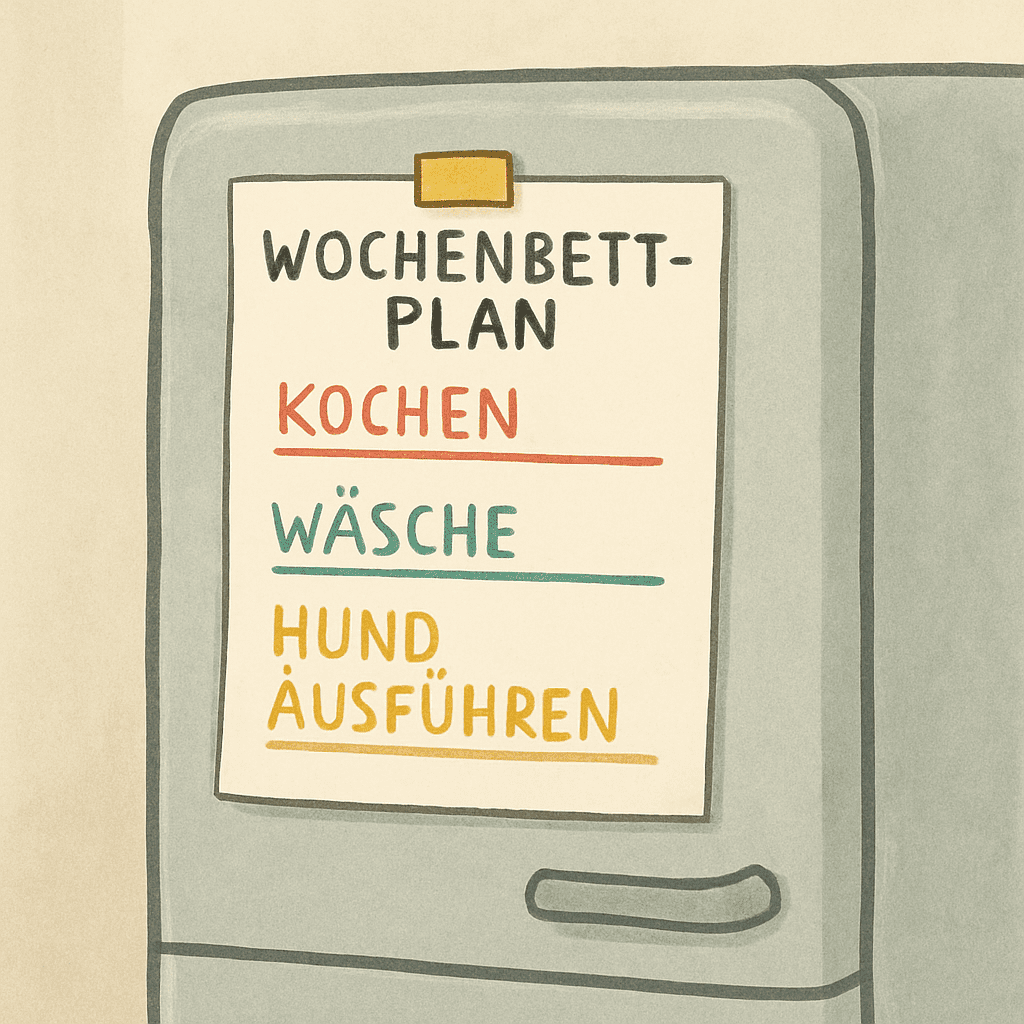
For the postpartum period to be successful, the crucial question is: Who ensures that the mother has as little to do as possible? This concerns four areas:
- Nutrition Regular, nutritious meals without the burden of planning; ideally prepped, delivered, or cooked.
- Sleep/Rest: schedulable time slots in which the mother is not responsible – neither physically nor mentally.
- Household/Logistics: Laundry, shopping, trash, appointments, paperwork; don't „let it slide,“ but actively hand it off.
- Professional support Reliable midwife contacts, Breastfeeding or feeding advice as needed, screening and contact points for mental health challenges.
These points sound trivial – yet they are precisely where inequality exerts its influence. If they are secured, products become secondary. If they are lacking, products become an attempt to plug a structural hole.
5) Support that exists – and often doesn't reach its intended recipients
Many families are unaware of available options or are daunted by the timing and bureaucracy. In addition to midwifery support, depending on the situation, household help, family care, or post-natal support tailored for girls/women may be an option. The key is that support is most effective when it's preventive. If it's only requested when exhaustion and overwhelm are at their peak, there's a lack of energy and time to handle applications, phone calls, and coordination.
This is another reason why a sensible standard would be: systematic information during pregnancy, proactive referrals, and clear, simplified access. A healthcare system that takes the postpartum period seriously doesn't wait for a breakdown to legitimize help.
6) A postpartum plan that looks like protection, not perfection
„Let me know if you need anything“ is well-intentioned, but often impractical postpartum: It creates mental labor. A viable plan replaces spontaneous requests with fixed tasks. It's not a control tool, but an architecture for relief.
Practically, this means:
- Grocery list Festive days when food is coming; clear specifications (allergies, vegetarian, portion sizes), plus a supply of simple basics.
- Household slots short, defined time slots (e.g., 45 minutes) where someone starts laundry, unloads the dishwasher, or goes grocery shopping.
- Visiting Rules: Visits only if they lighten the workload; no long sit-down visits; cancellation without discussion is possible.
- Contact person one person bundles news and coordinates help so that the mother doesn't have to do project management.
In this framework, Postpartum essentials actually helpful – but they remain tools, not the core of care.
7) Mental Health: The Part That Doesn't Run „On The Side“
Mental health challenges in the postpartum period are common – and they are treatable. A culture that takes early signals seriously is crucial. Warning signs can include: persistent low mood, severe anxiety, obsessive thoughts, irritability, feelings of emptiness, shame and guilt, a sense of alienation, or the impression of no longer being able to cope with the situation. The sooner these issues are discussed, the sooner support can be effective – through midwives, doctors, counseling centers, or therapy.
Here too: private self-optimization does not replace structures. A society that protects the postpartum period makes mental health a standard question—not an exception.
8) What would be politically and structurally necessary for the postpartum period not to remain a luxury
For every mother to be able to recover, it takes more than individual checklists. It requires a reliable infrastructure that demonstrably reduces the burden. This includes:
- Midwife care with capacity: good working conditions, regional networks, reliable placement, and genuine choices.
- Low-threshold, early available household help: unbureaucratic, adequately funded, not just in crisis mode.
- Couple time, which allows for relaxation: planable, financially viable, with a focus on the first few weeks as the supply phase.
- Standardized Postpartum Education: medically based (pelvic floor, bleeding, pain, sleep, breastfeeding/nutrition, mental health) and in understandable, multilingual formats.
- Protection for particularly vulnerable groups targeted offers for single parents, families with multiples, people in precarious jobs, with low social support, or increased medical risk.
Then would postpartum luxury products to be again what they are at best: optional comfort items. And luxury baby equipment it would be a matter of taste – not the wrong answer to a supply deficit. The postpartum period is not a privilege one must earn. It is a phase where regeneration and protection determine long-term health. If that is true, then recovery after childbirth is not a luxury item, but a minimum standard.