You're planning a last vacation before the birth, but are worried if flying during pregnancy is really safe? Don't panic: A so-called babymoon is, according to experts, a wonderful relief for your mental health before the big day. Flying during pregnancy is generally completely safe with a normal result.
For air travel during pregnancy, gynecologists generally recommend the golden window between the 14th and 27th week of gestation. During these weeks, nausea has often subsided and the strict week-of-gestation cutoffs for airlines have not yet kicked in. With the right medical preparation and clever logistical tips, you can embark on your travel adventure safely and absolutely stress-free.
The Golden Second Trimester: Why Weeks 14 to 27 Are Ideal for Your Flight Travel
Many expectant mothers wonder how long they can fly during pregnancy. The answer depends heavily on your well-being. Flying in the first 3 months is often quickly ruled out due to typical nausea, while the second trimester is considered the ideal travel window. Your body has adjusted to the changes, energy levels have returned, and the baby bump doesn't yet interfere with the cramped airplane seat.
To plan the perfect timeframe, this simple trimester overview will help:
- Trimester Physically often strenuous due to fatigue, but flying itself is harmless.
- 2. Trimester (Week 14-27): The golden travel period with highest stability and lots of energy.
- 3. Trimester: Extended sitting becomes uncomfortable. When asked until when one can fly while pregnant, most airlines answer: Until the 36th week (usually until the 32nd week for multiple pregnancies).
Nevertheless, check with your airline in good time to see up to which week of pregnancy flying is permitted without medical documentation. Often, a certificate from the gynecologist confirming an uncomplicated pregnancy is required as early as the 28th week.
Thrombosis Protection and Radiation Exposure: Medical Facts for Peace of Mind
You already know that your blood clots more quickly during pregnancy. Sitting for long periods in a cramped cabin further increases this risk of deep vein thrombosis – a blood clot in the legs. Fortunately, thrombosis prevention on an airplane for pregnant women is very simple and can easily be integrated into your trip:
- Compression Wear special compression stockings on long-haul or short-haul flights – both help. They noticeably support your veins and relieve your legs.
- Liquid: Drink plenty of water to keep your blood thin and your circulation stable.
- Movement Walk up and down the aisle regularly or circle your feet in place.
Besides their legs, many women also worry about the radiation exposure during flights for their unborn child. Here, gynecologists give a clear all-clear for occasional vacation flights. The cosmic radiation on a typical vacation flight is extremely low. It is far below the dose of a normal dental X-ray, which is why there is usually no danger to your baby.
At the very least, the last hurdle often awaits at the terminal when you wonder: Is the airport security check safe for pregnant women? Modern body scanners work with harmless millimeter waves and not with harmful X-rays. They do not penetrate the body, so you can go through them completely at ease.
Relax above the clouds: Seat selection, movement tips, and the right nutrition on board
When the cabin doors close, your personal comfort takes center stage. Reserving a seat with extra legroom is worth it, but a seat directly on the aisle is even more important. This way, you can get up and stretch at any time without having to wake your neighbors – a real blessing with frequent urination during pregnancy.
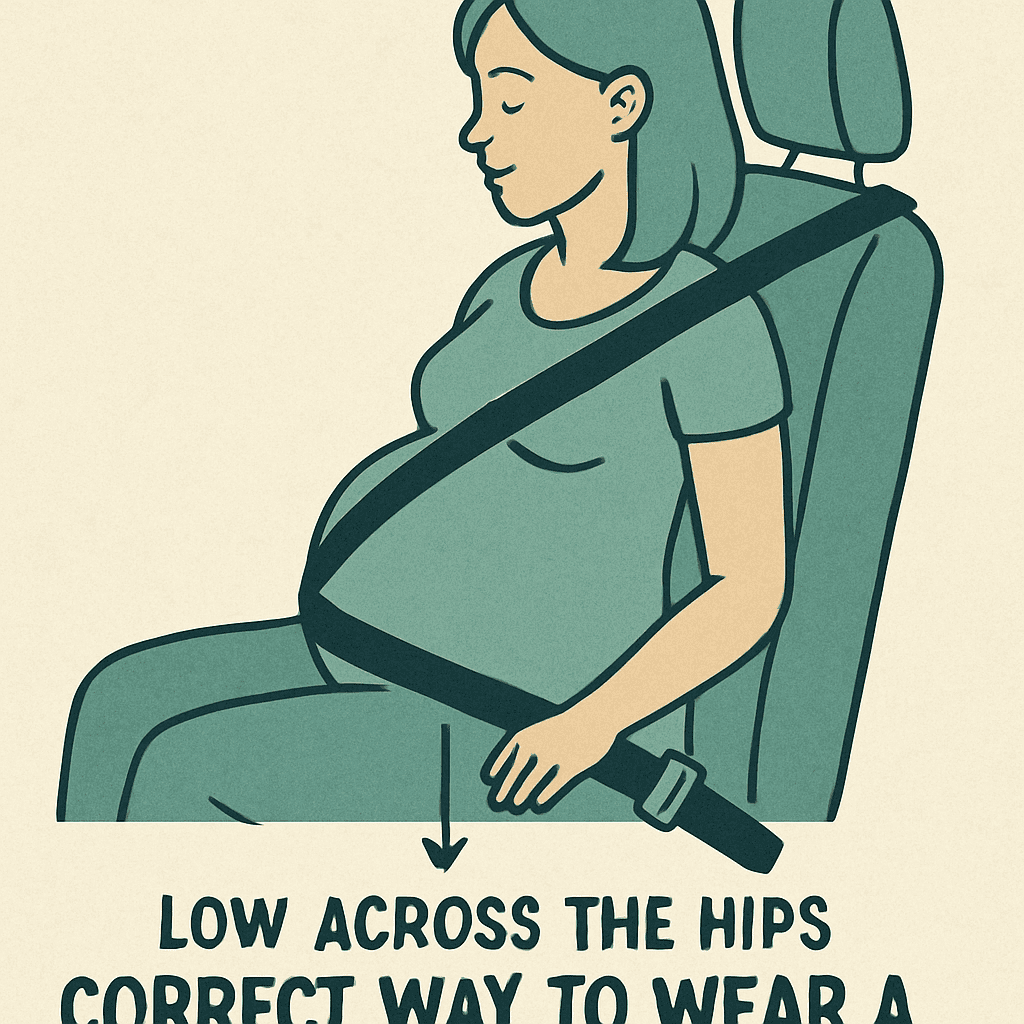
Once you are seated, the next important step for a safe flight follows. The seatbelt should never run directly across your baby bump. Instead, wear it low, beneath your belly, directly over your pelvic bones. This way, your unborn child remains optimally protected during unexpected turbulence without any uncomfortable pressure.
To prevent swollen legs (edema), this simple routine helps: keeping them elevated high in the air:
- Circle feet Every hour, move your ankles in place and rock on your tiptoes.
- Secure harness routing: Keep the strap permanently below your belly, even when sleeping.
- Strengthening Continuous fluid intake and a light diet on board with plenty of water and snacks will stabilize your circulation.
Carry-on Luggage Checklist: From Maternity Record to Fitness to Fly Certificate
The anticipation is building, but before boarding, there's a bit of organization to do. In addition to your comfortable in-flight comfort set, your trip requires an important document update. In the event of unforeseen circumstances, only special travel cancellation insurance for pregnancy complications will protect you from high cancellation fees. To ensure you remain completely relaxed at check-in, these essential documents should be conveniently in your bag:
- Always carry your maternity record in your hand luggage (ideally with an English insert).
- Medical certificate of fitness to fly (the so-called MEDIF form).
- Police for international health and travel cancellation insurance.
- List of your medical emergency contacts.
There is often uncertainty about from which week of pregnancy an in-flight medical certificate is actually necessary. Most airlines require this medical certificate from the 28th week of pregnancy. It simply confirms to the airline that you and your baby are fit for the altitude.
Your Roadmap to Liftoff: In 5 Steps, Ready for Your Baby Vacation
You are now well-equipped to handle the topic of flying during pregnancy. You know the most important steps: get the final medical go-ahead, check your travel insurance, and use the second trimester for booking. By packing your compression stockings and moving regularly on board, you'll have everything optimally prepared.
The initial uncertainty about the question „Is it okay to fly while pregnant?“ transforms into genuine anticipation. With medical clearance, you can now fly on vacation while pregnant completely relaxed. Enjoy this last break and gather valuable energy for your upcoming family chapter.