Choosing the right baby clothing size can be a challenge. Parents often face the question of which size is appropriate for their child. Babies grow quickly, and finding the right size is crucial for comfort and freedom of movement.
A comprehensive size comparison can help you make the right decision. From newborns to toddlers, there are many factors to consider. Age, weight, and individual growth rates play a significant role.
This guide offers practical tips and a detailed overview of baby sizes. Learn when size 80 fits or which size is ideal for newborns.
With the right information, comparing baby clothing sizes is made easy. Parents can ensure their baby is dressed comfortably and stylishly.
Why is the right baby size so important?
The right clothing size for babies ensures comfort and freedom of movement. It plays an essential role in the little ones' well-being. A tight onesie can restrict movement and cause discomfort.
There are several reasons why the correct size is crucial:
- Promote freedom of movementSuitable clothing supports playing and crawling.
- Ensure securityWell-fitting clothing minimizes the risk of injury.
- Avoid skin irritation.High-quality fabrics reduce the risk of skin reactions.
The right size therefore contributes significantly to a baby's healthy development and contentment.
Baby Sizes at a Glance: From Newborn to Toddler
Choosing the right baby clothing size can be confusing. Newborns typically start with sizes 50-56. These sizes are optimal for the first few weeks and months.
The transition to larger sizes usually occurs every two to three months. Size 62 is intended for babies aged 2 to 4 months. After this phase, they typically switch to size 68.
Larger babies and toddlers who are already crawling or walking often need sizes 74 to 86. These sizes not only ensure comfort but also promote flexibility in movement.
What size for newborns?
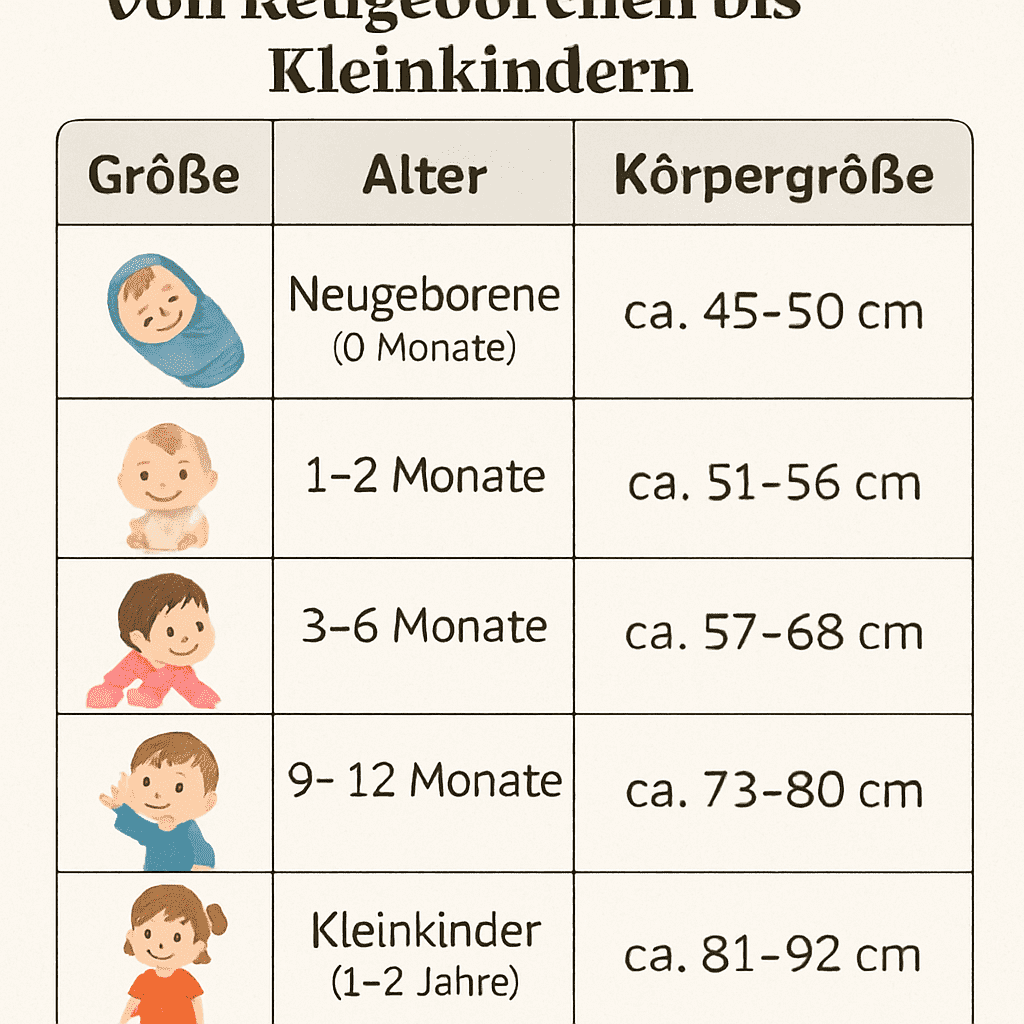
Newborns typically wear sizes 50 or 56. These sizes are specifically intended for the first few weeks of life. The average size of a newborn is about 50-52 cm.
Newborn clothing sizes also depend on birth weight. Babies who are a bit bigger or smaller may need a different size. It's important to customize the size for the best comfort.
Baby Sizes by Age: Chart & Guide
Orientation based on age and weight recommendations makes size selection easier. Babies grow rapidly, especially in the first few years of life. Parents can refer to a baby size chart.
Here is a general overview of baby sizes:
- Size 560-2 months
- Size 622-4 months
- Size 68: 4-6 months
- Size 746-9 months
- Size 809-12 months
- Size 8612-18 months
However, these values are guidelines. Babies develop individually and may require different sizes depending on their growth.
When does which size fit? Age and weight recommendations
The correct clothing size for a baby depends on their age and weight. Each growth phase brings new clothing requirements. It is important to choose the right sizes to ensure comfort.
Here are a few recommendations for guidance:
- Size 564.4-8.8 lbs, 0-2 months
- Size 624-6 kg, 2-4 months
- Size 686-8 kg, 4-6 months
Even though these guidelines are helpful, growth varies individually. Therefore, it makes sense to regularly check the fit of clothing. The focus should always be on the baby's well-being.
Sizes 56, 62, 68: The first few months
In the first few weeks, the baby grows quickly. Size 56 is usually suitable for the first two months. Afterward, many babies switch to size 62, which fits up to the fourth month.
In this phase, the baby develops rapidly. After about four months, there is often a switch to size 68. This provides additional room to move as the mobility of the arms and legs increases.
Size 74, 80, 86: Crawling, Standing, Walking
With the onset of mobility phases, clothing requirements change again. Size 74 is ideal when babies start to crawl. This size offers enough freedom of movement and flexibility.
Size 80 usually fits babies who are taking their first steps. During this phase, babies spend a lot of time exploring their surroundings. Size 86 is optimal for toddlers who can stand independently and walk confidently.
How fast do babies grow? Tips for changing sizes
Babies grow incredibly fast in their first few years. A change in size may be needed every few months. This rapid physical development requires constant adjustment of clothing. To be prepared for growth spurts, it is important to have the right clothing size on hand at the right time.
Here are some practical tips for dealing with size changes:
- Buy clothes in bulk when they are on sale.
- Pay attention to elastic materials that adapt well.
- Regularly check the fit, especially on the sleeves and pant legs.
It's helpful to always pay attention to your baby's signals. Red marks or discomfort can be signs that a new clothing size is needed. Flexibility and preparation help make the transition between sizes smooth.
Practical Tips for Choosing the Right Baby Size
When choosing the right baby size, fit and comfort are crucial. First, you should carefully study the manufacturers' size charts. Different brands have different standards. Therefore, it is important to pay attention to the exact measurements.
Here are some tips to find the right size:
- Try on a larger size beforehand.
- Choose adjustable clothing items for longer wear.
- Pay attention to the season before buying clothes.
Buy clothes a little larger so they fit longer. This saves money and reduces stress from frequent clothing changes. Also, pay attention to fabric quality to avoid skin irritation.
Frequently Asked Questions about Baby Sizes
Parents often have many questions when it comes to baby sizes. A common question is how often to change clothing sizes. A baby's weight also plays a role in choosing the right size.
Here are some frequently asked questions:
- When should you change your clothing size?
- How does the baby's weight affect its size?
- What role does the season play in choosing clothes?
Regularly check the fit of clothing to ensure it remains comfortable. Growth spurts are unpredictable, so stay flexible.
Conclusion: How to Succeed in Comparing Baby Clothing Sizes
Finding the right size comparison for baby clothes can be a challenge. With a little patience and the right information, parents can choose clothes that fit.
Regularly checking growth and adjusting clothing sizes is crucial. A size chart can help make the right choice. Remember that your baby's comfort comes first.