
Socially, every child is considered an absolute blessing. But what happens to one's own well-being when family growth exceeds personal energy reserves? An unexpected pregnancy often completely shakes up a hard-won balance in everyday life.
Behind closed doors, affected parents struggle with enormous exhaustion. According to extensive sociological studies, the so-called „unplanned number of children“ — meaning having more offspring than originally desired — leads to a noticeable decrease in life satisfaction. This emotional burden from unwanted pregnancies by no means means that mothers or Fathers love their surprise children less..
Rather, they simply suffer from the sudden logistical and financial squeeze. Maintaining the idealized myth that every child automatically brings only pure happiness ignores the daily reality for many families and only amplifies their silent feeling of isolation.
What science reveals: Why ‚extra‘ children statistically lower life satisfaction
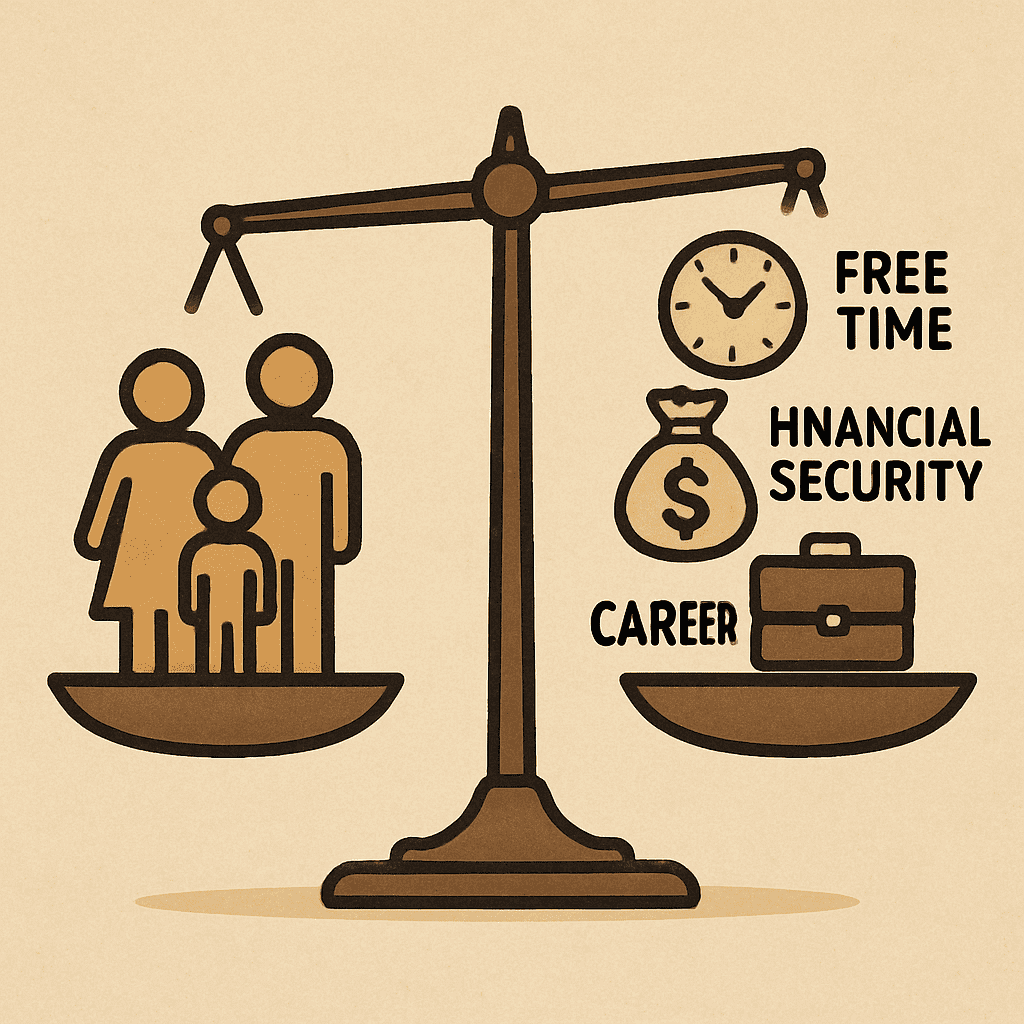
Society often tells us that each additional child automatically increases family happiness. However, demographic research paints a much more nuanced picture once the connection between the number of children and life satisfaction is examined more closely. A central psychological factor is decisive for parental well-being: autonomy. Do we have consciously decided on the new family member, we can better cushion the associated stress because we had control over our life planning ourselves.
However, if the family size exceeds the original plan – referred to in sociology as „unintended parity“ – the so-called parental paradox comes into play. Although the love for the child is undisputed, parents' measurable everyday satisfaction decreases. The difference between Wanted child and surprise child is clearly shown in three central findings about the psychosocial consequences of unplanned parenthood:
- Loss of self-determination Everyday life feels increasingly overwhelming due to externally imposed routines.
- Resource scarcity Existing time and financial buffers are shrinking drastically, with no new ones emerging.
- Long-term satisfaction low Parents' individual life satisfaction recovers significantly more slowly or declines permanently after childbirth.
An unforeseen increase quickly pushes this delicate family system to its limits, as existing energy reserves are rapidly depleted.
The Battery Analogy: How Financial Worries and Emotional Exhaustion Undermine Resilience
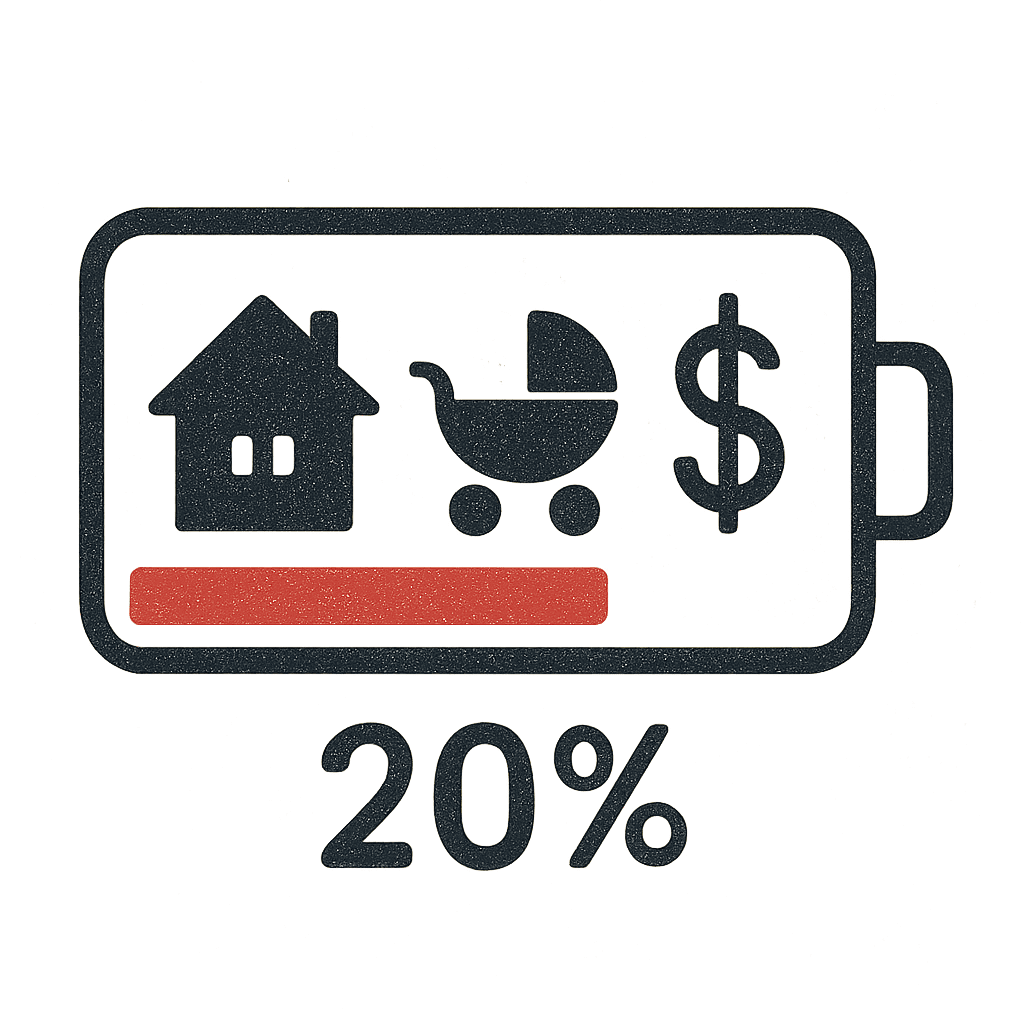
Imagine your energy like a battery with several devices plugged into it. Each child requires attention and resources. When an unplanned child arrives, the energy demand increases, while your capacity as a charger remains the same. This constant deficit often leads to a creeping, massive overwhelm in daily life with many children.
In real life, this energy deficit manifests in concrete strains like exploding grocery bills or chronic sleep deprivation. Especially the Balancing work and a large family becomes an unsolvable puzzle when a carefully planned return to work has to be postponed indefinitely due to a new pregnancy.
This is where the concept of socioeconomic buffering comes in, which states: money simply buys resilience. For wealthy parents, an unexpected child is usually just a logistical adjustment, as they can compensate for lack of time with paid support. Without these means, they transform financial worries however, rapid growth in family size quickly turns into a real struggle for survival, dominating family life.
If personal reserves of strength and external resources are completely depleted, the foundation of the family inevitably suffers, which often directly affects the partnership.
Love's Stress Test: How Unexpected Offspring Changes Couple Dynamics and Self-Image
We often believe that love can overcome any crisis, but the sudden loss of autonomy due to an unplanned child takes many couples by surprise. Those who wonder how a surprise child changes a partnership quickly encounter the loss of shared identity. A distinction is existential here: one can love their child unconditionally and simultaneously detest the new, overwhelming life situation – an often taboo situational regret that has nothing to do with rejecting the child.
In everyday life, a gradual stagnation of roles often becomes apparent. The causes of this phenomenon include precisely this feeling of being involuntarily stuck in pure functioning, while the following four shifts put an enormous strain on the relationship:
- The mental and physical caregiving is falling extremely disproportionately on only one partner.
- Couple time is almost entirely replaced by pure crisis and household management.
- Own professional ambitions are unilaterally and indefinitely put on hold.
- Constant stress is released in ongoing relationship conflicts.
If one understands this enormous burden, it becomes completely understandable why some parents quietly regret their involuntary situation. It is a cry against being overwhelmed, not a lack of familial affection. So that families do not break under this pressure, practical relief in everyday life is urgently needed.
From Survival Mode to New Balance: Strategies for Stress Management and Resource Finding
When everyday life feels like an endless struggle for survival, targeted stress management strategies can help. Start with cognitive restructuring – break down negative thoughts in three simple steps: recognize the stressful thought („I can't do this“), question it, and reframe it („This phase is tough, but we'll get through it day by day“). This creates emotional distance from the chaos.
Besides inner attitude, external relief is important to recharge the family battery. Actively use available resources for families in stressful situations:
- Free counseling centers: Pro Familia or Caritas provide immediate help with financial and organizational crises.
- Maternal and Family Care: In cases of acute medical overload, coverage by health insurance is common.
- Local Family Centers: Ideal for building simple, mutual care networks.
Dealing with social pressure also requires social resilience against unsolicited comments. A prepared phrase like „We love our children, but our capacities are simply reached“ immediately protects one's boundaries and helps acknowledge one's own burden.
Conclusion: Validating your feelings as the first step to recovery
The influence of family size on mental health is measurable and a completely normal reaction to a changed environment. When surprise children turn daily life upside down, exhaustion does not result from a lack of love, but simply from a lack of resources. This knowledge finally allows parents to acknowledge their own burdens without guilt.
This clarity helps consciously separate the beloved child from the challenging situation. An open approach to one's own boundaries and actively seeking support are essential. Those who prioritize their own mental health ultimately create the strongest foundation for the entire family.