
A wonderful weekend trip in nature often ends with an unpleasant surprise: you discover a tick attached to your child. According to the Robert Koch Institute, most people then wait for the typical erythema migrans (bull's-eye rash), but this is deceptive. About 30 percent of infections occur without this warning sign, which is why a tick bite can cause symptoms without being noticed.
Fortunately, the parasite acts like a slow courier, usually taking 12 to 24 hours to transmit the bacteria. Vigilance is necessary after a tick bite, as discomfort often occurs with a delay. There are significant differences in the symptoms of Lyme disease between children and adults, as children often react more with fatigue or stomach pain than with the well-known joint problems.
Tick bite or Lyme disease? The subtle difference between a harmless redness and erythema migrans
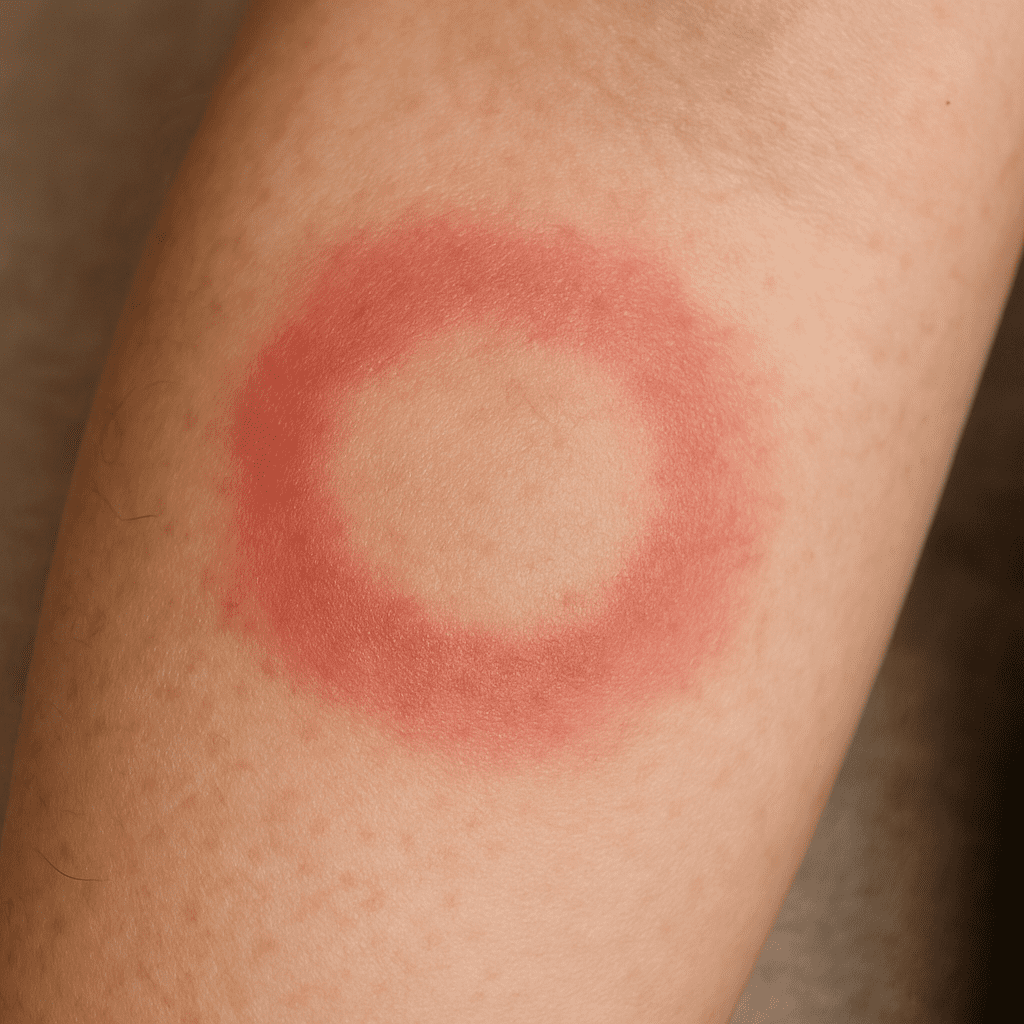
Immediately after removing a tick, you often notice a small red dot on your skin. An innocuous tick bite usually resembles a simple mosquito bite and only causes a normal, short-term inflammatory reaction. This initial skin irritation should disappear on its own after a few days. If, instead, a red ring spreads out from the bite site like ripples in water after days or weeks, it is referred to as erythema migrans – the first clear sign of a genuine Lyme disease infection.
Typical signs of Lyme disease rash for early detection:
- Size: The redness is steadily growing to a diameter of over five centimeters.
- Optics A typical circular redness forms around the tick bite, often with a pale center.
- Timepoint The rash appears between three and 30 days after the bite.
- Feeling The area is mostly painless and hardly itches.
Once you notice this ring-shaped swelling, it is advisable to see a doctor.
Flu symptoms without a runny nose? Interpreting the early warning signs in adults correctly
Many affected individuals wait for the typical red ring after a forest walk, but in almost a third of cases, this obvious warning sign is completely absent. If you suddenly feel run-down, have a fever, and experience joint pain instead, you might think of a harmless summer flu. However, these are often serious early Lyme disease symptoms. Since a unnoticed tick bite symptoms This can trigger a type of cold, and the difference from a classic cold is crucial: A viral flu almost always brings a cough or runny nose. If such respiratory symptoms are completely absent, you should be alert.
Since Incubation period of Lyme disease It usually only causes reactions days to several weeks after the actual contact, by which time the tick as the trigger is often long forgotten. Unexplained exhaustion and migrating limb pain are common in this phase. Early signs of Lyme disease without a bull's-eye rash, which can be medically clarified and treated very effectively with antibiotics in the early stages. While adults primarily react to the spread of bacteria with these non-specific, flu-like symptoms, the infection in children presents completely differently.
Red earlobes and irritability: Recognizing the atypical signs in children early
While Mom or Dad often have a fever like a summer flu during an infection, the clinical picture in children is much more varied. Lyme disease symptoms in children and adults differ significantly, which is why parents must be particularly attentive. They often first notice an inexplicable change in personality: the usually lively child suddenly withdraws, seems unusually irritable, or complains of vague stomach aches. Such different symptoms in toddlers and schoolchildren are easily confused with a typical growth spurt.
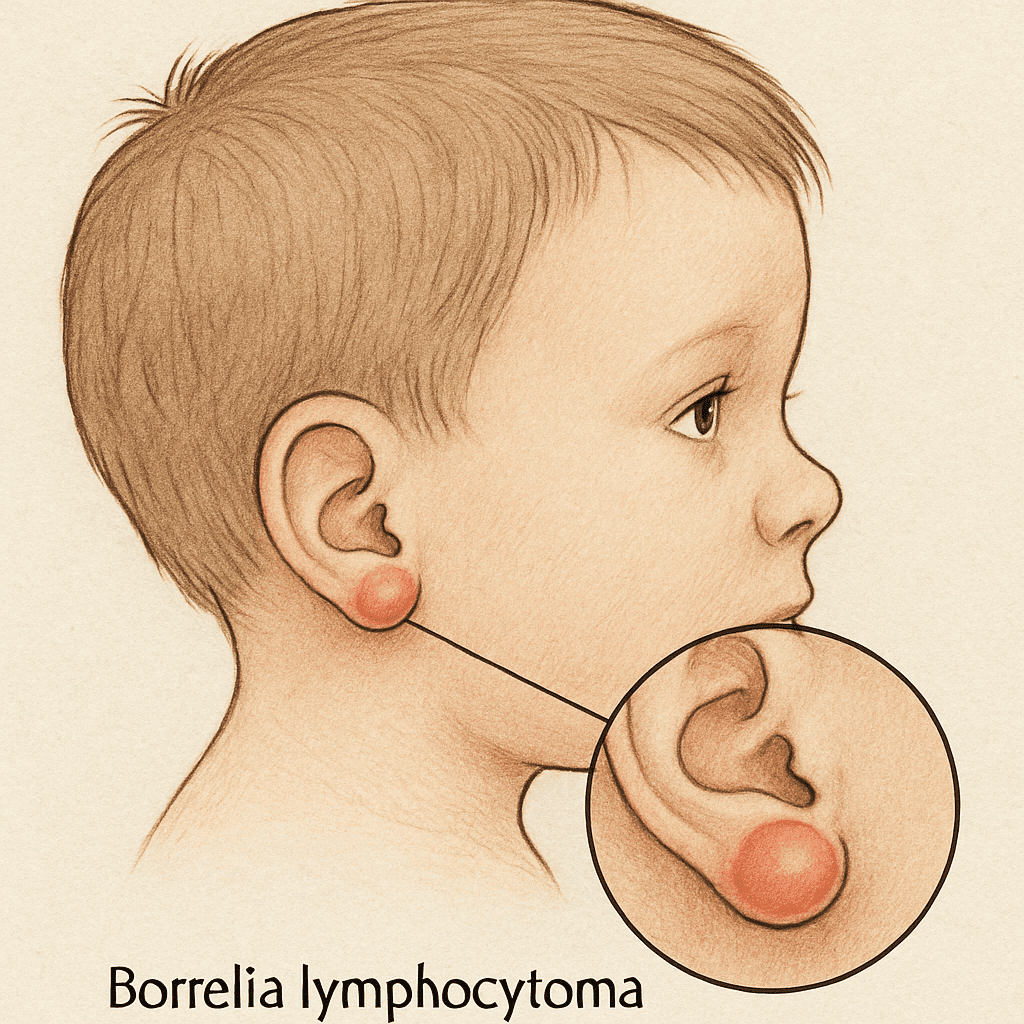
Besides the well-known erythema migrans, there is a warning sign that occurs almost exclusively in young patients: the so-called borrelial lymphocytoma. Pay attention to the following typical Tick bite symptoms in children:
- Earlobe swelling: A bluish-red nodule on the ear (lymphocytoma cutis, Lyme borreliosis), which is painless and slightly doughy.
- Unusual fatigue: Not normal exhaustion after playing, but a deep, persistent apathy.
- Persistent headaches A common warning sign in schoolchildren that does not improve with mere rest.
- Sudden personality change: Unexplained mood swings and sudden tearfulness in everyday life.
If these early signs go unnoticed, the bacteria can continue to travel through the body and attack the nervous system after weeks or months.
When Joints Wander: Facial Paralysis and Knee Pain as Hidden Late Complications
If the bacteria have spread through the bloodstream, they often attack the nervous system weeks later. A striking warning sign is a sudden weakening of one side of the face, where, for example, one corner of the mouth droops. This temporary facial paralysis, medically called facial palsy, clearly indicates that the nerves are infected. For doctors, such deficits provide important Signs and diagnostic clues of neuroborreliosis, which require prompt therapy. Although this picture initially appears frightening, it can usually be completely cured with the appropriate antibiotic therapy.
However, if months or even years pass unnoticed, the pathogens seek a new target. Typical Late sequelae of Lyme borreliosis often manifest as episodic joint swellings that apparently migrate from one body part to another. Unclear symptoms often appear Joint pain after a tick bite in the large joints, which is extremely painful in everyday life as Symptoms of Lyme arthritis in the knee makes itself noticeable. This so-called Lyme arthritis proves how crucial early detection of the disease is. However, immediate medical clarification right after the bite encounters a biological hurdle of the body.
Acting Correctly After a Sting: Why a Blood Test Immediately After a Bite is Useless
Search directly for the sting in the blood for antibodies, look for traces before the guest has even arrived. The body needs weeks for its defense force. This „immunological window“ makes early Interpretation of a Lyme disease blood test completely useless. The best Instructions for proper care of a tick bite is therefore
- Remove tick quickly
- Color mark insertion point
- Keep a symptom diary
This documentation shows you exactly, When to see a doctor after a tick bite is sensible. Your family doctor will reliably help you as soon as redness or other discomfort occurs.

Your 6-Week Roadmap: From Tick Bite to Safe Recovery
Remain calm after a tick bite and carefully observe your body for six weeks. A bite usually only becomes dangerous if warning signals such as erythema migrans (bull's-eye rash) or flu-like symptoms are ignored. Seek immediate medical attention for these symptoms. Early antibiotic therapy for a tick-borne infection reliably protects against long-term damage, effectively combats bacteria, and ensures rapid healing.